
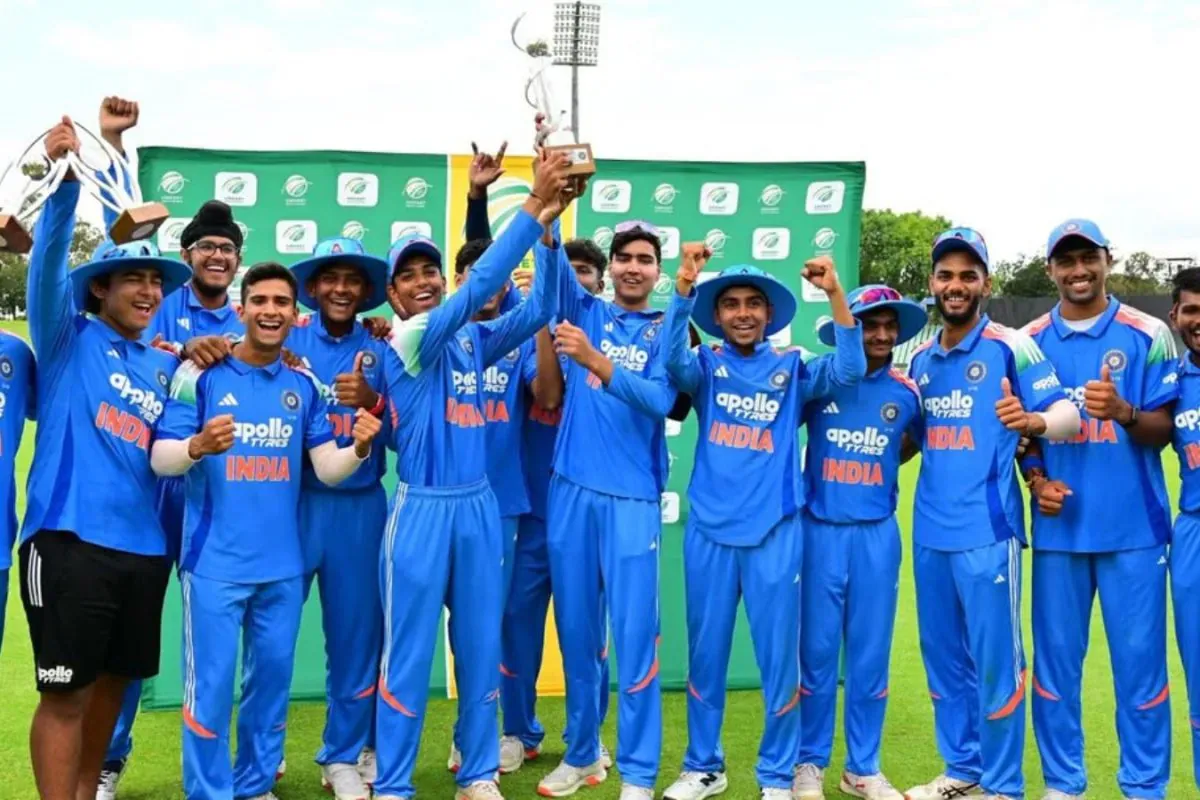
Emerging U19 cricket talents are no longer just promising youngsters waiting for a breakthrough. They are already influencing domestic leagues, youth World Cups, and even senior national team strategies. Across continents, these teenage cricketers are showing maturity, discipline, and skill sets that once took years to develop.
If you’ve followed youth tournaments recently, you’ve probably noticed how composed these players look under pressure. The gap between U19 cricket and international cricket is shrinking. That’s not by accident. It’s the result of structured academies, professional coaching, sports science integration, and exposure to franchise leagues.
Today’s under-19 cricketers are not just playing for fun or local pride. They are being groomed as future global icons.
Why Emerging U19 cricket talents Matter More Than Ever
The importance of youth cricket has evolved dramatically over the last decade. The Under-19 World Cup, organized by the International Cricket Council, has become a launchpad for international superstars.
Think about players like Virat Kohli, who captained India’s U19 team before becoming one of the greatest modern batters. Or Kane Williamson, who transitioned seamlessly from youth cricket to leading New Zealand at the highest level.
These examples prove that youth tournaments are not just developmental platforms. They are talent accelerators.
The structure around youth cricket now includes video analytics, mental conditioning, fitness benchmarking, and international tours. Young players grow up studying match footage, understanding pitch behavior, and managing pressure situations early in their careers.
That’s why conversations around Emerging U19 cricket talents are more serious than ever before.
The Evolution of Youth Cricket Systems
Two decades ago, many under-19 players were raw talents discovered in school tournaments. Today, they often come from professional academies linked with national boards.
Countries like India, Australia, England, and South Africa invest heavily in grassroots programs. The Board of Control for Cricket in India, for instance, runs structured age-group tournaments across states, ensuring a deep talent pool.
Australia’s system through Cricket Australia focuses on skill adaptability and mental toughness. England’s pathway under the England and Wales Cricket Board emphasizes red-ball technique alongside white-ball innovation.
This professionalization means that Emerging U19 cricket talents are better prepared physically and mentally before stepping into senior cricket.
Modern Skill Sets That Define Young Cricketers
One of the most exciting aspects of Emerging U19 cricket talents is how versatile they are. A young batter today can switch from classical defense to reverse sweeps within a single over. Bowlers are comfortable with slower balls, yorkers, and variations before they turn 18.
Exposure to leagues like the Indian Premier League has also influenced youth cricket. Teenagers now train specifically for high-pressure T20 moments. They understand strike rates, match-ups, and game awareness in a way previous generations did not at that age.
At the same time, many still value the technical foundation required for Test cricket. The balance between tradition and innovation is what makes this generation fascinating.
Mental Strength: The New Differentiator
Raw talent has always existed. What separates today’s youth players is mental conditioning.
Young cricketers now work with sports psychologists. They practice visualization techniques. They analyze failure with data rather than emotion. When a 17-year-old walks out to bat in a U19 World Cup semifinal, he often appears calmer than some seasoned professionals.
This composure is visible in major tournaments like the ICC Under-19 Cricket World Cup. Pressure situations reveal character, and many of these players display leadership qualities beyond their years.
That’s one reason why Emerging U19 cricket talents are being fast-tracked into senior squads.
Stories That Inspire a Generation
Every youth tournament produces a story that captures fans’ imagination. A fast bowler from a small town clocking 145 km/h. A left-handed batter scoring a match-winning century after recovering from injury. A captain who leads from the front with tactical brilliance.
Take the journey of Shubman Gill. His U19 performances were not just flashy; they were technically sound and consistent. That reliability translated into international success.
Similarly, Babar Azam built his foundation in youth cricket before becoming one of the most dependable batters in the world.
These examples highlight how Emerging U19 cricket talents are often previews of future cricketing icons.
Data, Analytics, and Youth Development
Technology has reshaped cricket at every level. Under-19 players now have access to performance tracking tools that monitor bat speed, release angles, fitness metrics, and workload management.
Analysts study opposition weaknesses and create tailored game plans even for youth matches. This analytical environment nurtures smarter cricketers.
Coaches don’t just rely on instinct anymore. They combine data with experience to refine technique and strategy. As a result, Emerging U19 cricket talents are tactically sharper than ever.
This analytical approach also reduces burnout and injuries, ensuring longevity.
Global Diversity in Youth Cricket
Cricket’s growth beyond traditional powerhouses has expanded the landscape of youth competitions. Nations like Afghanistan, Nepal, and Ireland have produced impressive U19 squads.
The rise of players from non-traditional regions reflects global development programs initiated by the International Cricket Council.
This diversity enriches the game. Different playing styles, pitches, and cultural approaches create dynamic competitions. It also means Emerging U19 cricket talents now come from a wider geographic pool.
The sport feels more inclusive and globally competitive.
Leadership Qualities at a Young Age
One of the most underrated aspects of youth cricket is leadership development. Captaining an under-19 national team involves tactical planning, media handling, and dressing-room management.
Look at how former U19 captains like Joe Root grew into senior leadership roles. The exposure to responsibility at a young age builds confidence and decision-making skills.
Today’s youth captains often handle high-pressure knockouts in front of millions of viewers. That experience shapes their cricketing personality early.
It’s no surprise that selectors closely track Emerging U19 cricket talents with leadership potential.
Transitioning from U19 to Senior Cricket
The jump from youth cricket to international cricket remains challenging. Bowling speeds increase. Media scrutiny intensifies. Expectations multiply.
However, structured domestic competitions help bridge the gap. First-class tournaments, List A matches, and T20 leagues offer a stepping stone.
Boards now avoid rushing players unnecessarily. Instead, they provide gradual exposure. This thoughtful approach ensures that Emerging U19 cricket talents develop sustainably rather than burning out.
Mentorship from senior players also plays a critical role during this transition.
Challenges Facing Young Cricketers
Despite the excitement, youth cricket comes with its own pressures. Social media scrutiny can affect teenagers deeply. Comparisons with established stars create unrealistic expectations.
Financial opportunities from leagues can distract focus. Balancing education and professional sport is another challenge many face.
That’s why holistic development programs matter. Coaches and administrators must prioritize mental health and long-term growth.
The conversation around Emerging U19 cricket talents must include safeguarding and responsible management.
The Role of Franchise Leagues
Franchise leagues have changed the dream trajectory for young players. A strong U19 performance can lead to lucrative contracts.
The Indian Premier League has provided platforms where teenagers share dressing rooms with global legends. That exposure accelerates learning.
Yet, franchise cricket should complement, not replace, red-ball foundations. Balanced scheduling ensures players become complete cricketers.
When managed well, league exposure enhances the development of Emerging U19 cricket talents.
What Scouts and Selectors Look For
Talent identification has become more nuanced. Selectors evaluate temperament, adaptability, fitness levels, and fielding standards alongside raw skill.
Fielding, in particular, has gained importance. Modern cricket demands agility and athleticism. Many youth players now treat fielding as a primary skill, not a secondary one.
Scouts also assess communication skills and game awareness. These traits determine how quickly players adapt to senior cricket.
That’s why tracking Emerging U19 cricket talents involves far more than checking scorecards.
Building the Next Generation of Icons
The journey from school cricket to international stardom is no longer accidental. It is structured, monitored, and strategically guided.
Cricket boards invest in academies, coaching certifications, and grassroots tournaments. Former international players mentor youth squads, sharing practical insights.
Parents, schools, and local clubs also contribute to nurturing dreams responsibly.
As fans, watching Emerging U19 cricket talents feels like witnessing the first chapter of a larger story. You see raw hunger, fearless stroke play, aggressive fast bowling, and innovative captaincy.
These young players carry the hopes of millions. They represent not just skill but evolution.
And if history has taught us anything, it’s that today’s under-19 prodigy could very well become tomorrow’s global superstar.
Read also:
arshin kulkarni bowling speed
rcb ka baap kaun sa team hai
mahika gaur religion
atharva taide के खेल–कूद से जुड़े आंकड़े