
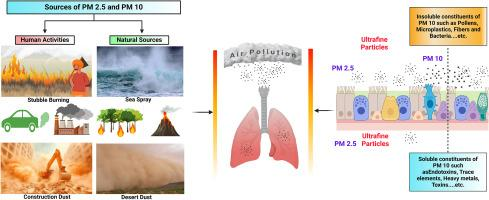
We tend to notice air pollution only when we can see or smell it. But the particles that do the most harm are often invisible. Known as PM2.5 and PM10, this airborne dust is small enough to slip past the body’s defences and reach deep into the lungs — and sometimes the bloodstream. Understanding these particles is the first step to protecting your health.
What Are PM2.5 and PM10?
These terms describe particles by size, and that size determines how dangerous they are.
- PM10 — particles up to 10 micrometres, including dust and pollen
- PM2.5 — fine particles 2.5 micrometres and smaller
- The smaller the particle, the deeper it travels into the lungs
- PM2.5 can even pass into the bloodstream
How Dust Affects the Body
The health effects of fine particles are wide-ranging and well documented. The American Lung Association links particulate exposure to respiratory illness, heart disease and other serious conditions. Short-term, dust can trigger coughing, irritation and worsened asthma; long-term exposure is linked to far more serious outcomes. Monitoring your environment with an air quality monitor is a practical way to understand your exposure.
Who Is Most at Risk
Some people feel the effects more sharply — children, older adults, and anyone with asthma or heart conditions. Health experts note that PM2.5 poses the greatest risk of all because of how deeply it penetrates. For these groups especially, knowing daily particle levels really matters.
Protecting Yourself From Airborne Dust
You can reduce exposure by improving indoor ventilation, using filtration, and checking air quality before outdoor activity on high-pollution days. For homes, schools and workplaces that want continuous awareness, Saksham Scientific’s dust monitoring kit provides real-time readings so you always know what you’re breathing.
Frequently Asked Questions
Why is PM2.5 more harmful than PM10?
PM2.5 particles are far smaller, so they travel deeper into the lungs and can even enter the bloodstream, making them the most harmful fraction of airborne dust.
What health problems does airborne dust cause?
Short-term effects include coughing, irritation and worsened asthma. Long-term exposure is linked to respiratory illness, heart disease and other serious conditions.
How can I check the air quality around me?
Use an air quality monitor or a dust monitoring system, which continuously measures PM2.5 and PM10 so you can see your real-time exposure and act on it.