
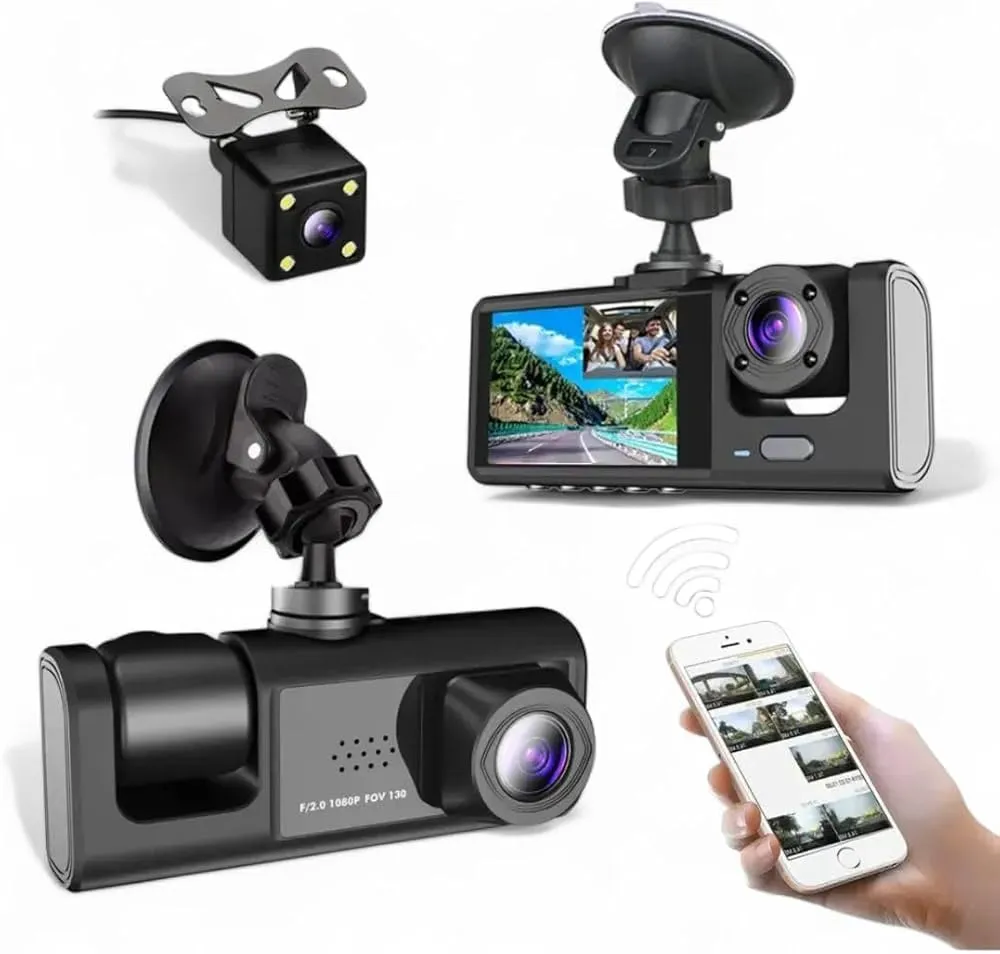
Smart Dash Cameras have completely redefined the way we protect ourselves on the road, turning every commute into a documented journey. I remember a friend who was involved in a “he-said-she-said” accident last year at a busy intersection. Without any witnesses, the insurance company was ready to split the fault down the middle. Everything changed when she pulled out a small memory card containing crystal-clear footage of the other driver running a red light. This isn’t just about recording video; it’s about having an unblinking, objective witness that never gets tired or distracted by a phone call.
The evolution of vehicle recording technology has moved at a staggering pace over the last decade. We have transitioned from grainy, shaky footage that could barely distinguish a car’s make to sophisticated artificial intelligence systems. Modern devices can now read license plates from fifty feet away in total darkness. They can even alert you if you are drifting out of your lane or if the car in front of you has started moving while you were distracted. This shift from passive recording to active assistance is why these gadgets have become a non-negotiable for anyone who spends significant time behind the wheel.
When we talk about the intelligence of these systems, we are referring to the integration of cloud connectivity and real-time data processing. Unlike the old-fashioned cameras that simply overwrote footage until the card was full, these modern units prioritize critical events. If the internal G-sensor detects a sudden jolt or a sharp swerve, it automatically locks that segment of video. This ensures that the most important evidence is never lost to a loop recording error. It provides a level of mental peace that allows you to focus on the drive rather than worrying about your storage space.
The Rise of Smart Dash Cameras in Modern Vehicles
The surge in popularity for Smart Dash Cameras is largely driven by a growing awareness of insurance fraud and “crash-for-cash” schemes. These scams often involve a lead car slamming on their brakes for no reason, forcing the rear driver into a fault-based collision. Having a high-definition recording of the lead car’s suspicious behavior is often the only way to avoid a massive spike in your premiums. Insurance adjusters are increasingly relying on this footage to settle claims faster, which benefits everyone involved in the process except the fraudsters.
Expertise in the automotive tech industry suggests that the best cameras are those that offer more than just a front-facing view. Dual-channel systems, which include a rear-facing camera, provide a three-hundred-and-sixty-degree safety net around your vehicle. This is particularly important for hit-and-run incidents that occur while you are parked. Many premium models now feature a “Parking Mode” that draws minimal power from your battery to keep the sensors active. If someone bumps into your car while you are in the grocery store, the camera wakes up and records the entire interaction, often catching the offender’s face or plate.
Trustworthiness in these devices is also found in their ability to survive extreme temperatures. Traditional electronics often fail when left in a car under the sweltering summer sun or during a freezing winter night. High-end manufacturers have replaced standard lithium-ion batteries with supercapacitors. These components are far more resilient to heat and cold, ensuring the camera doesn’t shut down exactly when you need it most. When you invest in a unit with a supercapacitor, you are buying a product that is engineered for the harsh reality of an automotive environment.
Why Professional Drivers Trust Smart Dash Cameras
For those who drive for a living, such as rideshare operators or long-haul truckers, the interior camera is just as vital as the exterior one. Smart Dash Cameras equipped with cabin-facing lenses provide protection against false accusations and unruly passenger behavior. Most of these lenses use infrared technology to see in pitch-black conditions, ensuring the safety of the driver throughout the night shift. This creates a professional atmosphere where both the driver and the passenger know that there is an objective record of their conduct, which naturally de-escalates potential conflicts.
The authoritativeness of a dashcam’s evidence often hinges on the quality of its sensor and aperture. You should look for devices that utilize Sony Starvis sensors, which are the industry gold standard for low-light performance. An aperture of f/1.8 or wider allows more light to hit the sensor, which is the difference between a blurry smear and a legible license plate at 2:00 AM. It is these technical nuances that separate a “toy” camera from a professional security tool. When you are presenting evidence to a court or an insurance company, the clarity of the image is everything.
GPS logging is another “smart” feature that adds a layer of undeniable proof to your recordings. By embedding your speed and exact coordinates into the video file, you can prove that you were not speeding at the time of an incident. This data is synced with Google Maps in most accompanying apps, allowing you to trace your exact route. It is incredibly helpful for fleet managers who need to monitor the efficiency of their drivers or for parents who want to ensure their teenagers are driving responsibly and staying within safe areas.
Technical Specifications and Video Quality Standards
When you begin your search for the perfect unit, you will encounter terms like 4K resolution and 60 frames per second. While 1080p is the bare minimum for any useful recording, 4K is rapidly becoming the new standard for serious drivers. The higher pixel count allows you to zoom into a frame and see details that would otherwise be lost. Furthermore, a high frame rate ensures that fast-moving objects, like a car speeding past you, are captured smoothly rather than as a series of disjointed frames. This fluidity is essential for accurate accident reconstruction.
Wide Dynamic Range, often abbreviated as WDR, is a feature that manages the balance between the brightest and darkest parts of a scene. Imagine driving through a tunnel and emerging into bright sunlight; without WDR, the camera would be blinded for several seconds, leaving you with a white screen during a critical transition. Smart Dash Cameras handle these lighting shifts instantly, ensuring that you never lose a second of visibility. It is this proactive management of light that defines a high-quality lens system and ensures your evidence is always usable.
Storage management is the silent hero of the dashcam world. Because these cameras are constantly writing data, they require “High Endurance” microSD cards. A standard card used in a digital camera will quickly wear out from the constant heat and re-writing cycles of a dashcam. Using a high-endurance card prevents the “card error” message that often occurs at the worst possible time. Most smart systems will also alert you through a voice prompt or a phone notification if the card is starting to fail, allowing you to replace it before you lose any data.
The app ecosystem that supports these cameras is where the “smart” functionality truly shines. Most units now feature built-in Wi-Fi, allowing you to connect your smartphone directly to the camera to download or view clips. You no longer have to take the memory card to a computer to share a video. If you capture a spectacular sunset or a close call, you can trim the clip in the app and send it via email or social media in seconds. This level of accessibility makes the technology much more integrated into our daily lives and easier to use during stressful post-accident moments.
Advanced Driver Assistance Systems and AI Integration
We are currently seeing a merge between dashcams and ADAS, or Advanced Driver Assistance Systems. These Smart Dash Cameras can act as a second set of eyes, providing audible alerts for forward collisions and lane departures. While they aren’t a replacement for an attentive driver, they serve as an excellent safety net for long road trips where fatigue might begin to set in. The AI can even recognize traffic lights and notify you if the light has turned green while you were distracted at a long stop.
The integration of voice control has made these devices much safer to operate while driving. Instead of fumbling for a “lock” button while trying to steer, you can simply say, “OK Camera, lock video” or “Take a photo.” This hands-free operation ensures that your focus remains on the road where it belongs. It is a perfect example of how technology can reduce distractions rather than adding to them. When the interface is voice-driven, the barrier between the driver and the technology disappears, making the road safer for everyone.
Cloud storage is the final frontier for vehicle security. Some of the most advanced models now offer 4G or 5G connectivity, allowing the camera to upload critical footage to the cloud in real-time. If someone steals your car, the camera can send a live feed and GPS location to your phone. It can also notify you if your car is being towed or if someone is tampering with it while it is parked on the street. This level of remote monitoring turns your dashcam into a comprehensive vehicle security system that protects your asset even when you are miles away.
Privacy and ethics are important considerations as we record more of our public life. It is vital to understand the laws in your specific region regarding audio recording. In some jurisdictions, you must inform passengers if you are recording audio inside the cabin. Most cameras allow you to easily mute the microphone if you prefer to only record video. Being a responsible owner means using the technology for safety and security while respecting the privacy rights of those who might be captured in your footage.
Installation is the stage where many people feel intimidated, but it has become much simpler in recent years. You can choose a basic “plug-and-play” setup using the cigarette lighter port, or you can go for a more professional “hardwired” installation. Hardwiring the camera into your fuse box allows for a much cleaner look with no visible cables and enables the 24/7 parking mode. Many local auto shops offer this service for a small fee, ensuring that the camera is integrated perfectly into your vehicle’s electrical system without draining the battery.
Maintenance of your camera is a simple but necessary task. Periodically checking the alignment ensures that the lens hasn’t been bumped and is still capturing a wide view of the road. You should also format your memory card every month or two to keep the file system healthy. Most smart units will remind you to do this through their app. Keeping the lens clean from fingerprints and dust is also essential for maintaining that crystal-clear 4K resolution that you paid for.
The social impact of this technology is also worth noting. We have seen dashcam footage used to capture everything from meteor strikes to random acts of kindness on the road. It has created a culture of accountability where people are generally more aware of their behavior because they know they might be on camera. This “observer effect” can lead to safer driving habits across the board, reducing the overall number of accidents and making our communities more secure. It turns every driver into a contributor to public safety.
Choosing the right unit involves balancing your specific needs with your budget. If you only drive during the day in a low-traffic area, a basic 1080p model might be sufficient. However, if you are a city dweller who parks on the street or a professional driver who works at night, investing in a high-end 4K system with cloud features is a wise move. The cost of the camera is often much less than the insurance deductible you would have to pay after a single contested accident. It is one of the few pieces of technology that can literally pay for itself.
Regarding the future, we can expect even deeper integration with the car’s internal systems. We might see dashcams that can communicate with other cars on the road to warn of accidents ahead or systems that can automatically call emergency services and send them your exact location and crash data. The line between the car and the camera is blurring, and the result is a much more intelligent and responsive transportation network. We are moving toward a world where the “accident” is no longer an unknown mystery but a data-driven event that we can learn from and eventually prevent.
As you look at the vast array of options available today, remember that the best camera is the one that you can rely on every single time you turn the key. It should be a quiet, helpful companion that works in the background without requiring constant attention. By focusing on quality sensors, robust build materials, and smart connectivity, you are putting a powerful tool in your corner. The road is full of surprises, and having a high-quality record of your journey is the best way to ensure that you are always prepared for whatever comes your way.
Investing in your safety is never a mistake. Whether you are protecting your personal vehicle, your business assets, or your family, the peace of mind provided by a professional-grade recording system is invaluable. Take the time to do your research, read the reviews, and choose a unit that fits your lifestyle. In a world that is moving faster than ever, having a smart witness by your side is the smartest move a driver can make. Your future self will thank you the next time the unexpected happens on the open road.