
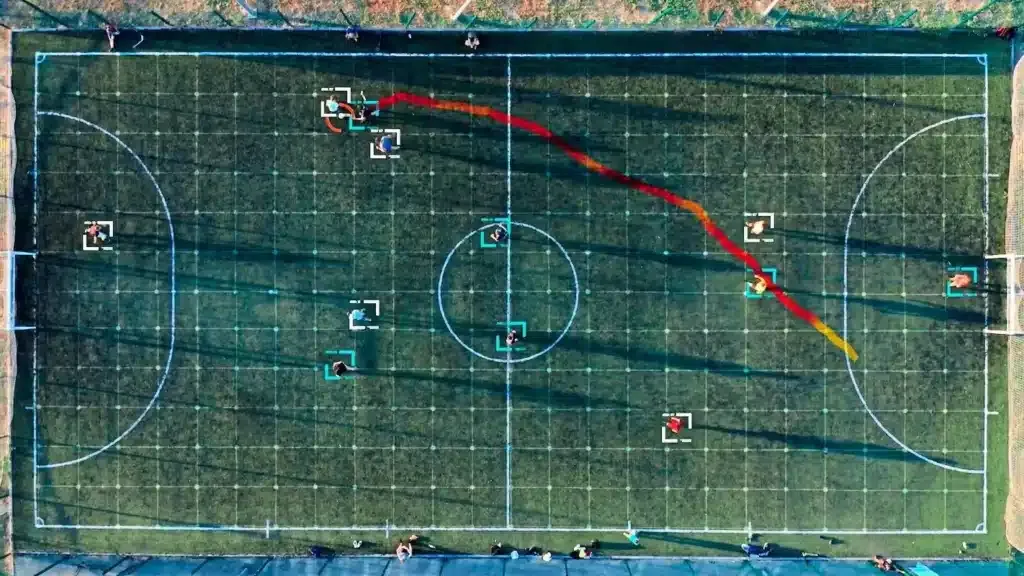
football heatmap analysis is one of the easiest ways to understand what’s really happening in a match—beyond goals, highlights, and final scorelines. If you’ve ever watched a game and felt like one team “controlled the match” but couldn’t explain why, heatmaps usually hold the answer.
I remember the first time I saw a heatmap after a local tournament game. Our coach didn’t yell. He didn’t blame anyone. He simply pulled out a screenshot and said, “This is why we struggled.” The heatmap showed our midfielders stuck too deep, our winger isolated, and our striker barely receiving service. It wasn’t emotional. It was visual truth.
That’s the real beauty of heatmaps. They turn complex movement into something you can instantly read. Whether you’re a coach, analyst, player, or just a passionate fan, learning to interpret heatmaps will make you smarter about football in a way that feels almost unfair.
In this guide, we’ll break down what heatmaps are, how to read them, what they reveal, and how to use them for real improvement—without drowning in complicated tactics talk.
What Is a Football Heatmap (And Why It Matters So Much)
A football heatmap is a visual chart showing where a player or team spent most of their time on the pitch during a match. The more a player is involved in an area, the “hotter” that zone becomes.
Hot zones usually appear in brighter colors, while areas with little activity remain cooler. It’s basically a map of presence and influence.
But here’s the key point: heatmaps don’t just show movement. They show intention. They reveal what a team wanted to do, what they were forced to do, and where the game actually lived.
That’s why heatmaps are used at every level now—from elite clubs to semi-pro teams and even fantasy football enthusiasts who want deeper performance insights.
Why Heatmaps Feel Like “Hidden Match Footage”
A full 90-minute match has thousands of micro-moments: pressing triggers, defensive shifts, overlaps, recovery runs, and off-ball positioning. Most people only remember the big moments.
Heatmaps don’t forget the small stuff.
They show you the patterns you missed while watching the ball. They reveal how wide a fullback played, whether a winger tracked back, or how often a midfielder entered the half-space.
And when you compare two heatmaps side by side—like a team in the first half vs second half—it feels like reading the match in a new language.
The Basics: How to Read Heatmaps Like a Pro
If you’re new to heatmaps, start with one simple habit: look at the player’s position first.
A left winger’s heatmap should naturally be wide and high. A defensive midfielder should show activity in central deeper zones. A center-back should mostly stay in the defensive third.
When a heatmap looks “wrong,” that’s where the story begins.
Maybe the winger was pinned back because the opponent dominated possession. Maybe the striker kept drifting wide because central passing lanes were blocked. Maybe the fullback was playing like a winger because the team used inverted midfield rotations.
The heatmap doesn’t give the full answer, but it gives you the best starting clue.
football heatmap analysis for Tactical Understanding
This is where things get exciting. football heatmap analysis isn’t just about where someone ran—it’s about why those zones mattered.
For example, if your team’s heatmap is heavily concentrated on the left side, it might mean:
Your left-back and winger created overloads
Your right side lacked confidence or creativity
The opponent allowed you space on that flank
Your team intentionally avoided the opponent’s strongest defender
Now imagine you’re a coach preparing for the next opponent. That heatmap instantly tells you where they like to build attacks and where they might be predictable.
Even as a fan, heatmaps can answer questions like:
Why did our striker feel invisible today?
Why did our midfield lose control?
Why did we keep getting exposed on counters?
When you use heatmaps correctly, you stop guessing. You start observing.
Player Heatmaps vs Team Heatmaps: What’s the Difference?
Player heatmaps focus on one individual. They show positioning, involvement, and movement tendencies.
Team heatmaps combine actions of multiple players, often showing overall control zones. Some platforms also show “average positions,” which can resemble a tactical shape.
Both are valuable, but they serve different purposes.
Player heatmaps help with role evaluation. Team heatmaps help with system evaluation.
If a player’s heatmap looks messy, it might not be the player’s fault. It might be the team structure forcing them into awkward spaces.
That’s why analysts always compare individual maps with the team context.
Heatmaps Don’t Measure Everything (So Don’t Misjudge Players)
One mistake people make is assuming a “hotter” heatmap means a better performance.
Not always.
A player can have a bright heatmap because they were chasing the game, defending constantly, or receiving the ball in low-impact areas. A center-back under pressure might have a strong heatmap but still struggle.
Similarly, a striker might have a quiet heatmap but score two goals because they stayed in the right spaces at the right times.
Heatmaps show activity, not quality.
To judge quality, you need to pair heatmaps with context: chances created, progressive passes, defensive actions, and match footage.
Understanding Zones: Where Heatmaps Become Tactical Gold
Football isn’t just left, right, and center. Modern tactics are built around zones—especially the half-spaces.
Half-spaces are the channels between the center and the wing. Many of the best attacks happen there because defenders struggle to cover them properly.
When you see a midfielder’s heatmap glowing in the half-space, it often means they were a key link between buildup and attack.
When a winger’s heatmap is inside instead of wide, it might indicate an inverted role. When a fullback’s heatmap is extremely high, it may show aggressive overlapping.
These patterns aren’t random. They’re tactical fingerprints.
Fullback Heatmaps: The Position That Reveals the System
Fullbacks are one of the easiest ways to spot a team’s style.
A traditional fullback heatmap stays mostly in the defensive third, covering wide zones.
But modern fullbacks often look like midfielders or wingers. Their heatmaps can show:
High wide positioning for constant overlaps
Central positioning for inverted buildup
Deep conservative roles against strong wingers
If both fullbacks have extremely advanced heatmaps, the team probably played with high pressing and possession dominance.
If one fullback is high and the other stays back, that often signals balance—one attacks, one protects.
Watching fullback heatmaps is like reading a team’s risk strategy.
Midfielder Heatmaps: The “Control Room” of the Match
Midfield heatmaps can tell you who controlled tempo and who got dragged out of position.
A deep-lying playmaker often has a heatmap centered in front of the defense, connecting passes and dictating rhythm.
A box-to-box midfielder usually shows a vertical spread, covering both halves.
An attacking midfielder’s heatmap often glows around the edge of the box and central attacking lanes.
If a team’s midfield heatmaps look flat and disconnected, it often means the team struggled to progress the ball cleanly.
And if one midfielder’s heatmap is unusually wide, it may show they were compensating for a winger who didn’t track back.
Winger Heatmaps: The Easiest Way to Spot Isolation
A winger’s heatmap tells you if they were supported or abandoned.
If the heatmap is wide and high with lots of touches, the winger was involved and receiving service.
If it’s wide but very faint, the winger was isolated—standing in space but not getting the ball.
If it’s central and busy, the winger may have played inverted, cutting inside to combine and shoot.
One of the most common real-match problems is a winger being “open” but never found. Heatmaps reveal that frustration clearly.
And for coaches, this becomes actionable. You can adjust buildup angles, encourage switches, or create overlaps to support that side.
Striker Heatmaps: Movement Patterns That Change Everything
Striker heatmaps can be surprising.
Some strikers stay central, living between the center-backs. Their heatmaps glow inside the box and central channels.
Other strikers drift wide, drop deep, or roam to create space for runners. Their heatmaps look scattered—but that might be exactly what the team needed.
A false nine often has a heatmap that looks like a midfielder’s. A target man might show heavy activity near the box but fewer touches overall.
When a striker’s heatmap is mostly outside the box, it could mean they were forced away from goal. That’s often a sign the opponent’s defense won the tactical battle.
football heatmap analysis for Coaches: Turning Data Into Decisions
For coaches, football heatmap analysis is most useful when it leads to clear changes in training or match planning.
Heatmaps can help answer questions like:
Are we building up through the correct areas?
Are our wide players receiving enough support?
Is our midfield compact or stretched?
Are we pressing high or sitting deep without realizing it?
Even at amateur level, heatmaps can improve communication. Instead of blaming players, coaches can show visuals.
A player may feel they worked hard, and they probably did. But if their heatmap shows they kept drifting out of shape, you can correct positioning without attacking confidence.
It becomes a teaching tool, not a punishment tool.
Heatmaps for Players: How to Improve Your Own Game
Players can use heatmaps to develop tactical awareness fast.
If you’re a midfielder and your heatmap shows you stayed too deep, maybe you’re playing safe instead of supporting attacks.
If you’re a fullback and your heatmap shows you never crossed the halfway line, maybe you’re missing chances to overlap.
If you’re a winger and your heatmap shows you didn’t track back, maybe your team’s defensive shape suffered.
The goal isn’t to “make the heatmap look good.” The goal is to match the role your coach expects.
The best players aren’t just talented—they’re positioned correctly more often than others.
Heatmaps and Pressing: Reading the Defensive Story
Heatmaps can also reveal pressing behavior.
A forward with a heatmap glowing in the opponent’s half likely pressed aggressively. A winger with activity deep in their own half probably tracked back and defended.
If an entire team’s heatmap is deep and narrow, it often indicates a low block. If it’s high and spread wide, it suggests pressing and dominance.
This matters because pressing isn’t just running. It’s coordinated movement.
When heatmaps show inconsistent pressing zones—like one player high and another deep—it can highlight why the press failed.
That’s something coaches can fix quickly with better triggers and spacing.
Heatmaps in Big Matches: Why Stars Sometimes “Disappear”
You’ve probably watched a big match and thought, “Why is their best player doing nothing?”
Heatmaps often reveal the reason.
Sometimes the star is marked out. Their heatmap becomes cold in their favorite areas. Or they drop deeper to escape pressure, which makes them less dangerous.
Other times, the team avoids that side entirely because the opponent stacked defenders there.
This is why heatmaps are popular in post-match analysis on TV and online. They make invisible tactics visible.
And they stop fans from blaming players unfairly when the real issue is structure or strategy.
Comparing First Half vs Second Half Heatmaps
One of the most powerful uses of heatmaps is comparing halves.
A team might dominate early, then fade later. Heatmaps can show whether they stopped pressing, became narrower, or lost control of wide areas.
A player might start strong, then disappear. Heatmaps can reveal if they were moved into a different role or became isolated due to tactical adjustments.
These comparisons are like a match recap without words.
If you want to get serious about analysis, this is one habit that makes you look like you’ve studied the game for years.
Heatmaps vs Pass Maps vs Touch Maps: Don’t Mix Them Up
Heatmaps show where a player was active.
Pass maps show passing connections and direction.
Touch maps show where touches happened, often with dots rather than heat.
They all look similar at first glance, but they answer different questions.
If you want to know where a player received the ball, touch maps help. If you want to know how a team progressed possession, pass maps help. If you want to know where a player lived during the match, heatmaps help.
The smartest analysts combine them.
Heatmaps are the “where.” Other maps help explain the “how.”
Common Heatmap Misreads That Create Bad Opinions
Heatmaps can mislead people when they’re used without context.
A defender’s heatmap might look busy because the opponent attacked constantly. That doesn’t mean the defender played well.
A winger’s heatmap might look quiet because the team played through the other side. That doesn’t mean the winger was lazy.
A midfielder’s heatmap might look wide because they were covering for teammates. That doesn’t mean they were out of position by choice.
So when you use heatmaps, always ask one extra question: what was the match situation?
Scoreline, opponent style, formation, and red cards can all change heatmap patterns.
Tools and Platforms That Show Heatmaps (And What to Look For)
Heatmaps are now available on many match analysis platforms, apps, and sports websites. Some show simple player movement, while others include event-based data like touches and actions.
When choosing a heatmap source, focus on clarity and accuracy.
You want a heatmap that matches what you saw in the match. If it looks confusing, it might be using a different dataset—like only showing touches instead of movement.
The best heatmaps also allow comparisons across matches. That’s where you can track improvement over time.
For example, if a winger’s heatmap slowly becomes more active in the final third across weeks, it might show growing confidence, better support, or improved tactics.
Using Heatmaps to Prepare for Opponents
This is where heatmaps become a competitive advantage.
If you know an opponent’s right side is always hot, you can plan to overload that area or target the space behind their advanced fullback.
If their midfield heatmap is narrow, you can stretch them wide with switches and overlaps.
If their striker’s heatmap shows they drift left, your right center-back can be prepared to step out and cover.
This is the type of preparation that separates serious teams from teams that just “show up and hope.”
And yes, even in small leagues, this works. Football patterns repeat everywhere.
The Real Value: Heatmaps Make Football Easier to Understand
At its core, heatmaps make football simpler.
They reduce 90 minutes into a picture that tells you where the game was played, who influenced which zones, and how tactics unfolded.
Once you learn to read them, you start watching matches differently. You stop following only the ball. You start noticing shape, spacing, and movement.
That’s the moment when football becomes deeper—and honestly, more fun.
Because now you’re not just reacting. You’re reading the game.
And that’s exactly what great analysis is all about.
Read also:
inter milan vs bologna fc lineups
ac milan vs bologna fc lineups
roundglass punjab fc vs mohun bagan super giant lineups
psg vs ac milan lineups