
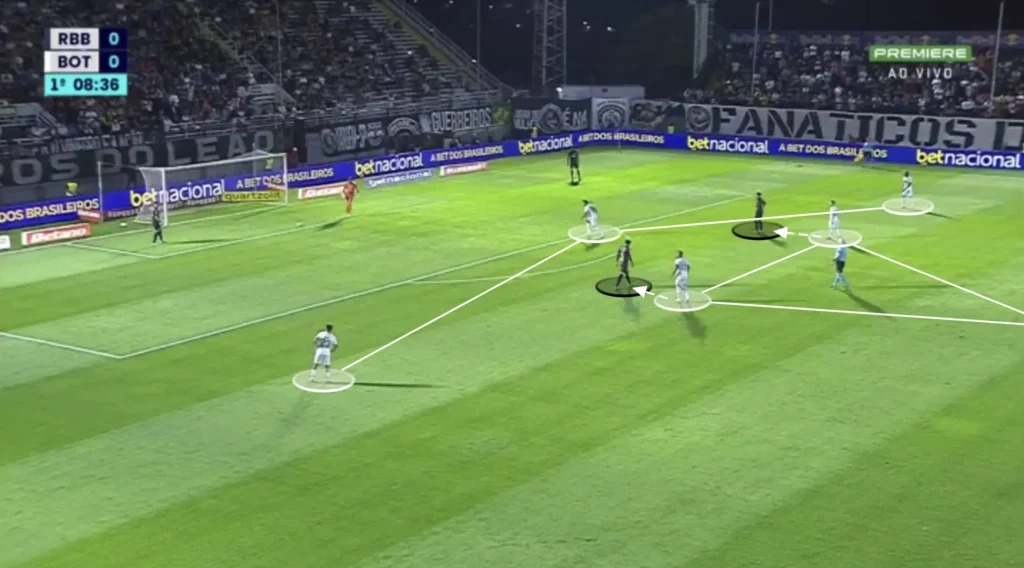
modern football pressing systems have completely changed how the game is played, coached, and understood at the highest level. What once looked like chaotic running is now a carefully designed tactical weapon, capable of suffocating opponents, forcing mistakes, and deciding matches before they fully settle into rhythm.
Football fans across the world have seen it happen. A defender takes one extra touch, a forward explodes forward, passing lanes disappear, and within seconds the ball is in the back of the net. This is not coincidence. It is preparation, coordination, and belief in a shared system that values space control as much as ball possession.
Pressing is no longer just about effort. It is about intelligence, structure, and timing. Elite teams press differently depending on game state, opponent profile, and even weather conditions. Understanding how these systems work reveals why modern football looks faster, more intense, and more unforgiving than ever before.
Table of Contents
ToggleThe Evolution of Pressing in Modern Football
Pressing has always existed in some form, but its modern interpretation is deeply rooted in tactical evolution. In earlier eras, defensive organization focused on compact blocks and reactive challenges. Teams waited, absorbed pressure, and countered when opportunities appeared.
The shift began when coaches realized that defending higher up the pitch reduced danger near their own goal. Arrigo Sacchi’s AC Milan in the late 1980s introduced synchronized pressing with a high defensive line, compact spacing, and collective movement. This idea planted the seeds for what would later become the backbone of modern football pressing systems.
As fitness levels improved and tactical analysis tools became more advanced, pressing turned from a philosophy into a science. Coaches started identifying pressing triggers, optimal distances between players, and specific zones where pressure should be applied. Football stopped being about chasing the ball and started being about controlling space.
Why Pressing Became a Tactical Necessity
The rise of ball-playing defenders and possession-oriented midfields forced a tactical response. Teams that allowed opponents unlimited time on the ball were slowly dismantled through patient passing and positional rotations.
Pressing emerged as the antidote. By denying time and space, teams could disrupt build-up play before it matured. This approach also aligned perfectly with attacking football, as winning the ball closer to goal increased scoring chances dramatically.
Modern fans often admire pressing for its intensity, but coaches value it for its efficiency. A well-executed press reduces defensive workload, shortens attacking transitions, and imposes psychological pressure on opponents. When executed correctly, pressing becomes a form of dominance rather than desperation.
Understanding modern football pressing systems at Elite Level
At the highest level, pressing systems are never random. Every movement is connected to a teammate’s position and the opponent’s options. Players are trained to recognize pressing cues such as a poor first touch, a backward pass, or a receiver facing their own goal.
In elite environments, pressing begins with the forwards. They dictate direction, angle their runs to block passing lanes, and guide opponents into predefined traps. Midfielders then step up aggressively, while defenders hold a high line to compress the pitch.
This coordinated effort is what separates elite pressing teams from those that simply run hard. Without structure, pressing collapses quickly. With structure, it becomes a relentless wave that forces errors even from the most technically gifted players.
High Press and Its Tactical Impact
The high press is the most visually striking version of pressing football. Teams push their defensive line close to the halfway line and apply pressure directly on opposition defenders and goalkeepers.
This system is risky, but when executed properly, it suffocates opponents. Teams like Liverpool under Jürgen Klopp turned the high press into an attacking weapon, creating countless goals from turnovers in dangerous areas.
The success of the high press depends heavily on collective speed, positional discipline, and communication. One player arriving late can open a passing lane that breaks the entire structure. That is why modern pressing teams spend hours rehearsing movements without the ball.
Mid-Block Pressing and Controlled Aggression
Not every team can sustain a high press for ninety minutes. Mid-block pressing offers a more controlled alternative. Instead of engaging near the opponent’s box, teams wait until the ball enters specific zones before springing into action.
This approach balances defensive security with pressing intent. It allows teams to remain compact while still applying pressure at the right moment. Many international teams favor this system due to limited preparation time and varying player profiles.
Mid-block pressing showcases the intelligence behind modern football pressing systems, proving that pressing is not about constant sprinting but about choosing the right moments to strike.
Counter-Pressing and the Art of Immediate Recovery
Counter-pressing, often referred to as “gegenpressing,” focuses on winning the ball back immediately after losing it. The idea is simple but demanding. The opponent is most vulnerable just after regaining possession, often disorganized and facing their own goal.
Teams like Bayern Munich and Manchester City use counter-pressing as a defensive safety net. Instead of retreating, players swarm the ball carrier and nearby options, preventing counter-attacks before they develop.
This system requires incredible awareness and collective commitment. Players must react instantly, trusting teammates to cover spaces behind them. When done right, counter-pressing feels almost invisible, yet it controls the rhythm of the game.
The Role of Fitness and Sports Science
Pressing systems demand elite physical conditioning. Players must perform repeated high-intensity sprints, quick directional changes, and sustained concentration throughout the match.
Sports science has played a major role in enabling modern football pressing systems. GPS tracking, workload management, and recovery protocols allow teams to maintain pressing intensity without increasing injury risk.
Coaches now rotate players strategically, not just for freshness but to preserve pressing efficiency. A tired forward who cannot close down passing lanes can compromise the entire structure, making physical readiness as important as tactical understanding.
Pressing Triggers and Decision-Making
One of the most misunderstood aspects of pressing is decision-making. Players are trained to recognize triggers that signal when to press and when to hold shape.
These triggers can include a heavy touch, a sideways pass near the touchline, or a receiver isolated from support. Recognizing these moments requires experience and trust in the system.
This intelligence is what elevates pressing from effort to expertise. Teams that master pressing triggers conserve energy while remaining aggressive, proving that pressing is as much mental as it is physical.
How Coaches Design Pressing Systems
Coaches tailor pressing systems based on squad profile and opposition analysis. A team with fast wingers may press wide areas aggressively, while a midfield-heavy team may focus on central congestion.
Training sessions often include shadow pressing drills, positional games, and scenario-based exercises. These drills teach players how to move as a unit, adjust distances, and communicate non-verbally.
The best coaches simplify complex ideas into repeatable patterns. This clarity allows players to react instinctively during matches, making pressing feel natural rather than forced.
Pressing Systems and Player Development
Young players are now introduced to pressing concepts early in their development. Academies emphasize spatial awareness, defensive responsibility, and collective movement alongside technical skills.
Understanding modern football pressing systems helps players read the game better, even when they are not directly involved in the action. It encourages accountability and teamwork, qualities that translate across all levels of football.
This developmental focus ensures that pressing is not just a tactical trend but a foundational element of modern football education.
Psychological Impact of Pressing
Pressing affects more than just tactics. It creates psychological pressure that forces opponents into rushed decisions and uncharacteristic mistakes.
Players under constant pressure lose confidence, hesitate on the ball, and abandon their game plan. This mental fatigue often leads to late-match collapses, especially against teams known for relentless pressing.
For pressing teams, this psychological edge reinforces belief. Each successful press builds momentum, turning collective effort into emotional energy that fuels performance.
Tactical Adaptations Against Pressing
As pressing systems evolved, opponents developed counter-strategies. Goalkeepers became playmakers, defenders learned to split wider, and midfielders dropped deeper to offer outlets.
These adaptations keep the tactical battle dynamic. Pressing teams must constantly evolve, adjusting angles, timing, and player roles to stay effective.
This ongoing chess match is what makes modern football pressing systems so fascinating. They are never static, always adapting to new challenges and innovations.
Pressing in Different Competitions
Domestic leagues, international tournaments, and continental competitions each present unique pressing challenges. Fixture congestion, travel demands, and squad depth influence how aggressively teams can press.
In knockout tournaments, teams often balance pressing with caution, choosing moments carefully to avoid being exposed. This adaptability demonstrates the maturity of modern pressing philosophies.
Successful teams understand that pressing is a tool, not a rule. Knowing when to press and when to rest is what separates champions from contenders.
The Future of Pressing Football
The future of pressing lies in further integration of data, artificial intelligence, and individualized player roles. Coaches are already using advanced analytics to refine pressing zones and predict opponent behavior.
As the game continues to evolve, pressing will remain central to tactical identity. Its principles align with football’s natural rhythm, emphasizing control, intensity, and collective responsibility.
Understanding modern football pressing systems offers a deeper appreciation of the game’s complexity. It reveals that every sprint, angle, and pause is part of a larger story unfolding across the pitch, shaped by preparation, intelligence, and relentless ambition.
Read also:
denmark national football team vs portugal national football team timeline
uruguay national football team vs colombia national football team matches
india national football team vs bangladesh national football team lineups
portugal national football team vs denmark national football team lineups