
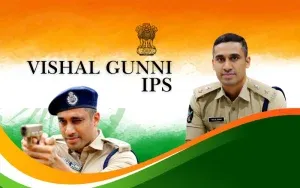
The Indian Police Service is among the most respected government services in India. It was established to ensure effective policing, maintain public order, and strengthen the country’s law enforcement system. IPS officers serve in different states and central organizations, taking responsibility for public safety, crime prevention, and administrative leadership.
Many candidates search for IPS Corner because they want complete information about the profession before beginning UPSC preparation. Learning about the service early helps aspirants understand the level of commitment required and the opportunities available after selection.
Basic Eligibility Criteria
To apply for the IPS through the Civil Services Examination, candidates must have a bachelor’s degree from a recognized university. Those appearing in the final year of graduation are also eligible according to UPSC guidelines.
The minimum age for applicants is generally 21 years. Relaxation in the upper age limit is available for reserved categories under government rules. Candidates must also satisfy medical and physical standards because the profession demands good health and physical endurance.
Checking the latest UPSC notification before applying is always recommended since eligibility rules may be updated.
UPSC Selection Method
The recruitment process is divided into three stages. The Preliminary Examination is the first step and contains objective questions designed to shortlist candidates for the next phase.
The second stage is the Main Examination. It consists of descriptive papers that assess knowledge, writing ability, reasoning, and understanding of various subjects. Candidates who qualify for the mains appear for the Personality Test.
During the interview, the board evaluates confidence, communication skills, leadership qualities, ethical values, and awareness of national and international issues. The final merit list is prepared using marks from the Main Examination and the Personality Test.
Training After Selection
Selected candidates begin their professional journey with structured training. Foundation courses are followed by specialized police training that combines classroom education with practical exercises.
The curriculum includes criminal law, police administration, forensic science, cybercrime investigation, disaster management, leadership development, and public administration. Outdoor training covers physical fitness, weapon handling, horse riding, swimming, and field exercises.
This training prepares officers to handle challenging situations while maintaining professionalism and discipline.
Responsibilities In Service
An IPS officer performs multiple administrative and operational duties. Depending on the posting, officers supervise police stations, monitor investigations, maintain law and order, manage emergency situations, and coordinate with district administration.
Some officers work in specialized departments such as cybercrime, intelligence, anti-terror operations, economic offences, or traffic management. Others serve in central organizations responsible for national security and internal intelligence.
The profession requires quick decision-making, accountability, and a strong commitment to public service.
Career Growth Opportunities
Career advancement in the Indian Police Service follows a structured promotion system. Officers begin with probation and later receive independent responsibilities in district administration.
With experience and good performance, promotions lead to positions such as Superintendent of Police, Deputy Inspector General, Inspector General, Additional Director General, and Director General of Police.
Experienced officers may also receive opportunities to work in organizations like the Intelligence Bureau, Central Bureau of Investigation, Border Security Force, and other national agencies.
Preparation Planning
Preparing for UPSC requires consistency rather than speed. Aspirants should first understand the syllabus and examination pattern before selecting study material.
Reading newspapers regularly improves awareness of governance, current affairs, economic developments, and international relations. Standard books should be revised multiple times instead of collecting unnecessary resources.
Mock tests and answer-writing practice improve confidence while helping candidates identify areas that require additional attention. Time management also plays a significant role during preparation.
Many students use IPS Corner resources to organize their preparation and gain a better understanding of examination requirements.
Important Personal Qualities
Knowledge alone cannot make an effective IPS officer. Leadership, discipline, honesty, patience, emotional intelligence, and communication skills are equally important throughout the career.
Officers often face situations that require balanced judgment under pressure. The ability to remain calm while making lawful and ethical decisions strengthens public confidence in the police system.
Continuous learning has become increasingly valuable as technology continues transforming modern policing.
Challenges And Rewards
Working as an IPS officer involves long hours, emergency duties, and constant responsibility toward public safety. Officers frequently manage law-and-order situations during festivals, elections, protests, and natural disasters.
Although the workload can be demanding, the profession offers immense satisfaction because officers directly contribute to public welfare and national security. Every assignment provides opportunities to solve real problems and improve administrative efficiency.
Dedication and integrity remain the strongest foundations for long-term success in this career.
Future Of IPS
Modern policing now includes cyber security, digital forensics, financial crime investigation, artificial intelligence, and data analysis. Officers who continue developing new skills remain better prepared for evolving security challenges.
The government continues investing in technology-driven policing, making technical knowledge increasingly valuable for future officers. Candidates should therefore combine traditional preparation with awareness of emerging technologies.
Conclusion
The Indian Police Service continues to attract dedicated candidates who wish to build a meaningful career in public administration and law enforcement. officersdetails.com offers readers a convenient platform to explore information related to civil services, competitive examinations, and government career opportunities. Careful planning, disciplined preparation, physical fitness, and continuous learning remain the keys to success in the UPSC journey. Stay focused on your objective, trust the preparation process, and take every step with confidence toward becoming an IPS officer.
Read also :-