
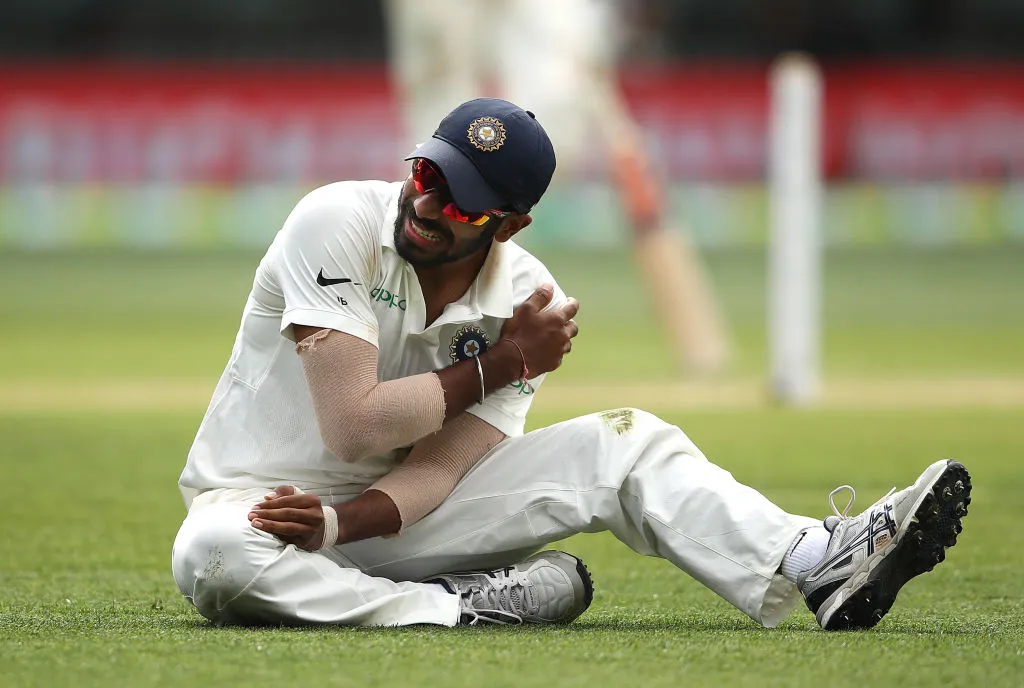
fast bowler workload injury is the silent predator lurking behind every thunderous delivery that crashes into the stumps at 150 kilometers per hour. To the spectator in the stands, a fast bowler is a marvel of human mechanics, a whirlwind of rhythmic strides and explosive power. However, to a sports scientist or a team doctor, that same bowler is a finely tuned machine operating at its absolute breaking point. The act of bowling fast is, quite literally, an unnatural movement that forces the human body to endure forces it was never designed to handle. When the volume of these deliveries exceeds the body’s ability to repair itself, the result is an inevitable breakdown that can sideline a star for months or even years.
Imagine the sheer physics involved when a pacer hits the crease. As the front foot plants, a force equivalent to eight to ten times the bowler’s body weight travels up through the ankle, into the knee, and settles in the lower spine. This happens over and over, sometimes thirty times a day in a Test match, for days on end. If the preparation isn’t perfect, or if the schedule is too crowded, something has to give. Most often, it is the lumbar vertebrae or the soft tissues of the shoulder and side. This is why understanding the mechanics of a fast bowler workload injury has become the most important area of study in modern cricketing medicine.
The evolution of the game has only added fuel to this fire. We now live in an era of year-round cricket, where a bowler might jump from a high-intensity T20 league in the heat of Dubai to a grueling five-day Test series in the damp conditions of England. The body thrives on consistency, but the modern calendar demands constant adaptation. This lack of a “down period” means that the micro-trauma sustained during a match never fully heals. These tiny tears in the muscle or microscopic cracks in the bone accumulate until they manifest as a catastrophic injury that requires surgery and a year of rehabilitation.
I remember watching a young pacer burst onto the scene with raw, frightening pace. He was the talk of the town, picking up five-wicket hauls with ease and making the best batters in the world look like amateurs. But within eighteen months, he had disappeared from the international circuit. The reason? A double stress fracture in his back. He had been bowled into the ground by a captain who didn’t understand the “red zone” of workload. It is a heartbreaking story that repeats itself in every generation, but thanks to modern data, we are finally learning how to write a different ending for these athletes.
The Science of Stress and the Modern Workload Management
In the quest to prevent a fast bowler workload injury, teams now employ a sophisticated method known as the “Acute:Chronic Workload Ratio.” This sounds complicated, but it is actually a very logical way of looking at physical stress. The “chronic” load is the average amount of bowling a player has done over the last four weeks, establishing a baseline of fitness. The “acute” load is what they do in the current week. If the acute load suddenly spikes far above the chronic baseline—say, if a bowler who usually bowls twenty overs a week is suddenly asked to bowl fifty—the risk of injury skyrockets.
This ratio is the holy grail for modern strength and conditioning coaches. They use GPS trackers tucked into the back of a bowler’s jersey to measure every sprint, every jump, and every delivery. This data allows them to see when a bowler is entering the “danger zone.” When you see a star pacer being “rested” for a crucial match, it isn’t because they are lazy or the team doesn’t care about winning. It is because the data shows their workload has reached a point where a fast bowler workload injury is statistically imminent. It is a proactive strike against the laws of physics.
The spine is usually the first victim of overwork. Because fast bowling involves a combination of side-bending and rotation at high speeds, the lumbar discs are under constant threat. A stress fracture, or spondylolysis, is the nightmare diagnosis every pacer fears. It starts as a dull ache that many bowlers try to play through, but if ignored, the bone can actually crack. Recovery doesn’t just involve rest; it involves rebuilding the entire core stability of the athlete so that the muscles can take the pressure off the bone. This is a slow, tedious process that tests the mental resolve of the toughest players.
We also have to consider the “landing” mechanics. Every time a bowler lands, their ankle is subjected to massive shearing forces. This is why you see many pacers wearing shoes with extra padding or custom-made orthotics. A slight misalignment in the foot can cause a chain reaction that leads to a knee injury or a hip impingement. By analyzing the “ground reaction forces,” scientists can tweak a bowler’s technique to ensure the impact is distributed more evenly across the body. It is a game of millimeters where the prize is a decade-long career.
Why the T20 Revolution Changed the Injury Landscape
One might think that bowling only four overs in a T20 match is easier on the body than bowling twenty overs in a Test match. However, the reality of fast bowler workload injury is more nuanced. While the volume is lower in T20s, the intensity is much higher. Every ball is bowled at maximum effort, often with variations like slower balls or yorkers that require different, sometimes more stressful, muscular movements. The “stop-start” nature of T20 tournaments, with constant travel and varying pitch types, creates a different kind of fatigue that can be just as dangerous as the long-form grind.
Furthermore, the pressure to bowl at 145kph+ in every single game is immense. In Test cricket, a bowler can “find a rhythm” and bowl at 80% effort for periods to save energy. In the shortest format, there is no such luxury. This constant “max-effort” state puts an incredible strain on the shoulder’s rotator cuff and the pectoral muscles. We are seeing an increase in “side strains,” which occur when the oblique muscles are torn during the explosive delivery stride. These injuries are notoriously difficult to heal because every breath and every movement involves the core.
The rise of franchise cricket has also led to a “fragmented” medical history for many players. A bowler might be managed by their national board for six months, then move to three different franchises, each with its own medical staff and training philosophies. This lack of centralized data makes it harder to track a fast bowler workload injury before it happens. If the franchise trainer doesn’t know what the bowler did three months ago, they can’t accurately calculate that crucial Acute:Chronic ratio. This is why many top-tier pacers are now hiring their own private physios to maintain a consistent thread of care.
There is also the psychological pressure to perform while “niggling.” In a high-stakes auction-based league, a player might feel that if they sit out a few games due to soreness, their market value will drop. This leads to players taking painkillers and masking the symptoms of an impending injury. But the body doesn’t lie. A masked pain today usually leads to a snapped tendon tomorrow. Education is the only way to combat this, teaching players that their body is their greatest financial asset and protecting it is more important than a single match check.
Biomechanics and the Quest for the Perfect Action
For decades, there has been a debate about the “safest” bowling action. Traditionally, coaches believed that a purely “side-on” action or a purely “front-on” action was the way to go. The real danger arises with the “mixed action,” where the hips are facing one way and the shoulders are facing another. This creates a massive “twist” in the spine at the point of maximum loading. Most modern coaching focuses on eliminating this twist to reduce the likelihood of a fast bowler workload injury during the peak of a player’s career.
However, many of the world’s fastest bowlers have unconventional actions. Think of Lasith Malinga’s slinging arm or Jasprit Bumrah’s hyper-extended elbows. These actions generate incredible pace and awkward angles for the batter, but they also place unique stresses on the joints. Analyzing these “outlier” actions requires a bespoke approach. You cannot apply a standard template to a genius. Instead, the focus shifts to strengthening the specific muscles that support those unique movements. It is about making the body strong enough to survive the action the bowler was born with.
Technology is playing a massive role here. High-speed 3D motion capture allows analysts to see exactly where the “energy leaks” are in an action. If a bowler’s elbow is dropping, or if their front knee is collapsing, they are not only losing pace but also increasing their injury risk. By correcting these small flaws in the off-season, a bowler can actually become faster and safer at the same time. It is the ultimate goal of sports science: the optimization of human performance through data-backed intervention.
We are also seeing the rise of “smart balls” that contain internal sensors. These balls measure the revolutions on the seam and the exact speed at the point of release. When combined with workload data, this allows coaches to see if a bowler’s “quality” is dropping even if their “quantity” is still high. If a bowler is still bowling their overs but the revolutions on the ball have dropped, it is a sign of neural fatigue. The brain is protecting the body by subconsciously slowing things down. This is the earliest possible warning sign of a looming breakdown.
Recovery Protocols: The Other Half of the Equation
If bowling is the “damage” phase, then recovery is the “building” phase. In the past, recovery was a beer and a massage. Today, it is a clinical process. Ice baths, or cryotherapy, are used to reduce inflammation in the joints and muscles. Compression garments are worn during travel to prevent blood pooling and promote circulation. Every minute of sleep is tracked because sleep is the only time the body truly produces the growth hormones required to repair the micro-tears in the muscle fibers.
Nutrition is equally critical. A fast bowler can burn thousands of calories in a single day of play. If they don’t replace those calories with the right balance of proteins and carbohydrates, the body starts to break down its own muscle tissue for energy. This “catabolic state” is a fast track to injury. Modern bowlers work with nutritionists to ensure their “fuel” matches their “output.” They are taught to see food as medicine, a necessary tool for maintaining the high-performance standards required by the international game.
Hydration is another often-overlooked factor. When a bowler is dehydrated, the fluid in their spinal discs decreases, making them less effective at absorbing shock. A dehydrated muscle is also more prone to cramping and tearing. During a long spell in a hot climate, a bowler might lose several kilograms of water weight. Replacing that fluid, along with essential electrolytes, is a constant battle that happens on the sidelines between every over. It is the small details that keep the wheels from falling off the wagon.
The mental side of recovery is just as important. Being a fast bowler is an emotionally exhausting job. The pressure to lead the attack and the physical pain of the role can lead to burnout. Teams now use “wellness surveys” where players rate their mood, their stress levels, and their quality of sleep. If a bowler is mentally fried, their coordination will suffer, and their risk of injury will increase. Taking a mental health break is no longer seen as a weakness; it is recognized as a vital part of maintaining a long and successful career in the fast lane.
Future Trends in Managing Fast Bowler Workload Injury
Looking ahead, we are likely to see even more integration of Artificial Intelligence in predicting injury patterns. By analyzing thousands of hours of footage and years of medical data, AI will be able to tell a coach, “This bowler has a 75% chance of a side strain in the next three days if they continue at this intensity.” This kind of foresight will revolutionize how captains use their bowlers. We might see “bowling caps” similar to pitch counts in baseball, where a bowler is strictly limited to a certain number of deliveries per week regardless of the match situation.
The development of new “wearables” will also continue. We are already seeing “smart clothing” that has sensors woven directly into the fabric to monitor muscle activation. This will allow physios to see if a bowler is “compensating”—using their shoulder too much because their glutes are tired, for example. Catching these compensations in real-time is the next frontier in preventing a fast bowler workload injury. It moves the science from “post-match analysis” to “live-game intervention.”
There is also a growing movement toward “early specialization” prevention. Many of the injuries we see in international cricketers actually have their roots in their teenage years. If a fifteen-year-old bowls too many overs before their bones have fully fused, they create permanent weaknesses that will haunt them in their twenties. Global cricket academies are now implementing strict workload guidelines for youth players, ensuring that the next generation of pacers has a solid foundation that can withstand the rigors of the professional game.
Ultimately, the goal is to keep the best players on the park for as long as possible. We want to see the greats bowling at their peak, challenging the best batters and providing the thrills that only fast bowling can offer. While the risk of injury will never be zero—the act of bowling fast is simply too violent for that—our ability to manage that risk is better than it has ever been. It is a partnership between the player’s heart, the coach’s eye, and the scientist’s data.
As we continue to push the boundaries of what the human body can do, the conversation around workload will only become more prominent. It is the price we pay for the spectacle of speed. Every time you see a pacer steaming in for their fifteenth over of the day, remember the incredible balancing act happening inside their body. They are walking a tightrope between glory and the operating table, and the science of workload management is the safety net that keeps them from falling. The game of cricket is richer for their efforts, and it is our responsibility to ensure we protect the remarkable athletes who make it all possible.