
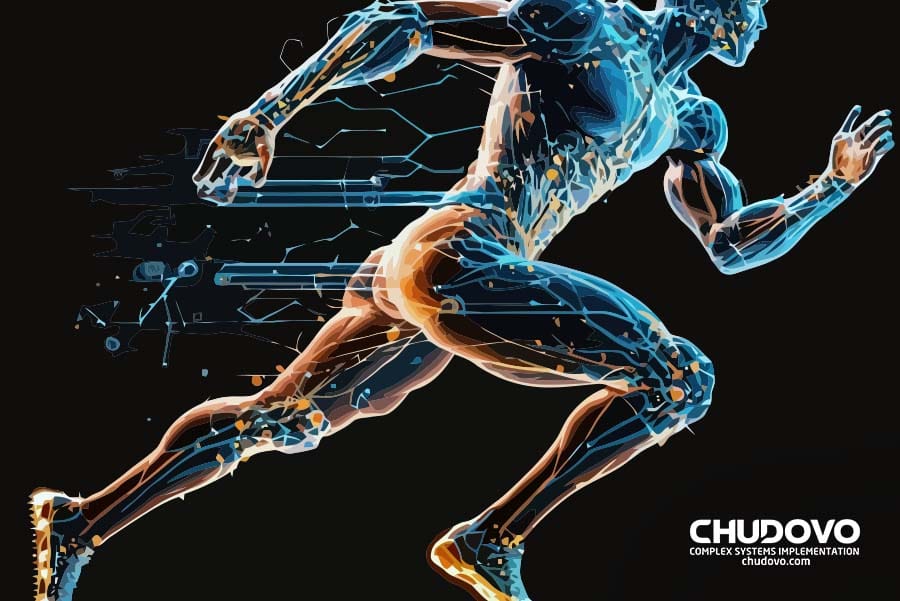
AI in sports training is revolutionizing the way athletes prepare, perform, and recover. By integrating artificial intelligence into coaching and analysis, teams and individuals gain precise insights into performance, efficiency, and strategy that were previously impossible.
From professional leagues to youth academies, AI in sports training is being adopted to enhance every aspect of athletic development. Whether it’s optimizing workout routines, analyzing biomechanics, or predicting injury risks, AI is proving to be a game-changer in modern sports.
Real-life examples demonstrate the effectiveness of AI. Football clubs and Olympic teams are leveraging data-driven algorithms to monitor player workloads, refine training sessions, and even anticipate peak performance moments, showing that AI is not just theoretical—it’s actionable.
How AI in Sports Training Works
The core of AI in sports training lies in data collection and analysis. Wearables, motion sensors, cameras, and smart equipment gather massive amounts of data on movement, heart rate, stamina, and technique. AI algorithms then process this information to generate actionable insights.
Coaches and athletes can use these insights to identify strengths, weaknesses, and patterns that were previously hidden. For example, a sprinter can analyze minute deviations in stride or posture to improve speed, while a footballer can optimize passing accuracy and decision-making during high-pressure situations.
By continuously learning from data, AI systems adapt training plans dynamically. This ensures that AI in sports training is personalized, effective, and capable of maximizing performance while reducing the risk of injury.
Personalized Training and AI
One of the biggest advantages of AI in sports training is personalization. Traditional training programs often follow a one-size-fits-all approach, which may not suit every athlete’s physiology or skill level. AI enables coaches to design workouts tailored to individual needs.
For example, AI can determine the ideal intensity, duration, and type of exercises for a swimmer based on past performance and fatigue levels. It can also adjust recovery protocols, ensuring that athletes train smarter, not just harder. These personalized strategies highlight why AI in sports training is rapidly becoming essential in competitive sports.
Injury Prevention Through AI
Injury prevention is a critical area where AI in sports training has shown remarkable impact. By analyzing biomechanics, load, and recovery metrics, AI can identify risk factors before they manifest as injuries.
For instance, a runner experiencing subtle imbalances in gait might receive real-time recommendations for corrective exercises. Similarly, footballers or basketball players can monitor joint stress, optimizing training loads to avoid overuse injuries. These insights allow athletes to extend their careers while performing at peak levels.
Teams that integrate AI for injury prevention have reported fewer sidelined players and faster recovery periods, emphasizing the practical benefits of AI in sports training beyond performance gains.
Enhancing Performance Metrics
AI technology also improves the measurement of performance metrics. Traditional statistics such as speed, distance, and scoring are enhanced with deeper analysis of movement efficiency, reaction times, and tactical decision-making.
Basketball players, for example, can analyze shot trajectories and defensive positioning with AI-powered systems. Similarly, football teams use AI to evaluate passing networks, pressing efficiency, and off-the-ball movements. By providing granular insights, AI in sports training ensures that every training session contributes to measurable improvements.
Real-Life Success Stories
Several professional teams have publicly credited AI in sports training for performance improvements. A Premier League football club used AI to monitor player workload and optimize recovery, leading to a reduction in fatigue-related injuries. Olympic sprinters employ AI to fine-tune stride mechanics, achieving record-breaking times.
Even amateur athletes benefit from AI applications. Smart wearable devices with AI algorithms guide recreational runners, cyclists, and swimmers to train safely and efficiently. These stories illustrate that AI is not limited to elite athletes—it’s transforming sports across all levels.
AI and Tactical Analysis
Beyond physical training, AI in sports training plays a crucial role in tactical analysis. Coaches can simulate match scenarios, evaluate opponent tendencies, and adjust strategies in real-time.
In football, AI analyzes opponents’ passing patterns and defensive weaknesses, allowing teams to develop precise game plans. In basketball or hockey, AI evaluates player positioning and movement trends to optimize offensive and defensive plays. This integration of strategy and technology highlights how AI in sports training is comprehensive, influencing both preparation and competition outcomes.
Future Trends in AI-Powered Training
The future of AI in sports training is promising. AI algorithms are becoming more sophisticated, incorporating predictive analytics, real-time feedback, and immersive simulations using VR and AR.
Athletes may soon train in virtual environments that simulate high-pressure match conditions while monitoring physiological responses in real-time. These advancements will make AI in sports training even more precise, immersive, and effective, transforming the landscape of athletic development.
The growing adoption of AI also means that smaller clubs and academies can access professional-grade insights, democratizing high-level sports training for a broader audience.
Mental and Cognitive Benefits
In addition to physical enhancements, AI in sports training improves mental and cognitive performance. Systems can track focus, reaction times, and decision-making under stress, providing feedback to strengthen cognitive skills essential for competition.
Athletes engaged in AI-assisted mental conditioning programs report improved concentration, faster tactical decisions, and better resilience under pressure. This demonstrates that AI contributes to holistic athlete development, supporting mind and body simultaneously.
Integration Across Sports Disciplines
AI applications span a wide range of sports. From swimming, football, and basketball to extreme sports and athletics, AI in sports training adapts to the specific requirements of each discipline.
For example, gymnasts can receive AI feedback on posture and landing technique, while rowers monitor stroke efficiency. In tennis, AI tracks serve accuracy and spin, optimizing performance for tournaments. This versatility highlights the universal impact of AI across athletic domains.
Read also:
england national football team vs senegal national football team timeline
denmark national football team vs portugal national football team lineups
germany national football team vs italy national football team lineups
ecuador national football team vs brazil national football team timeline